Last updated November 16, 2026
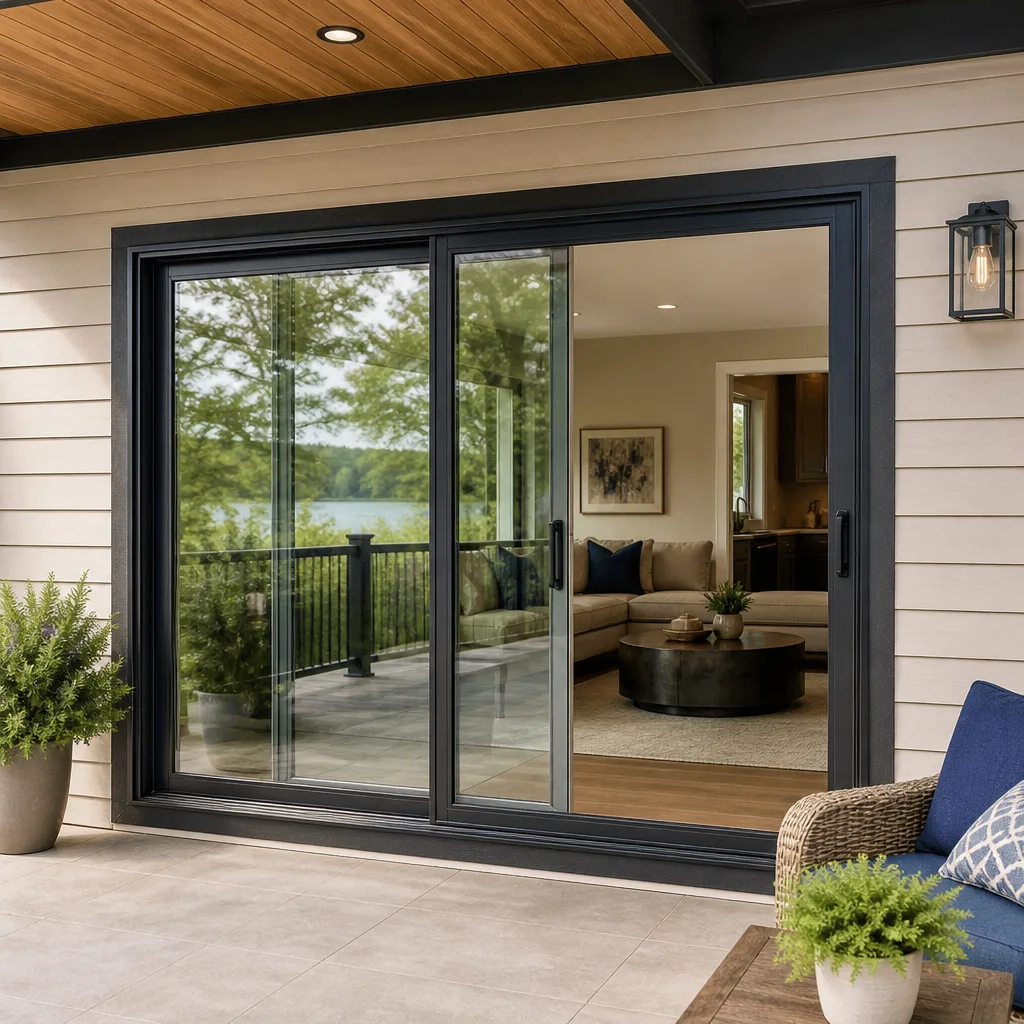 Sliding glass doors
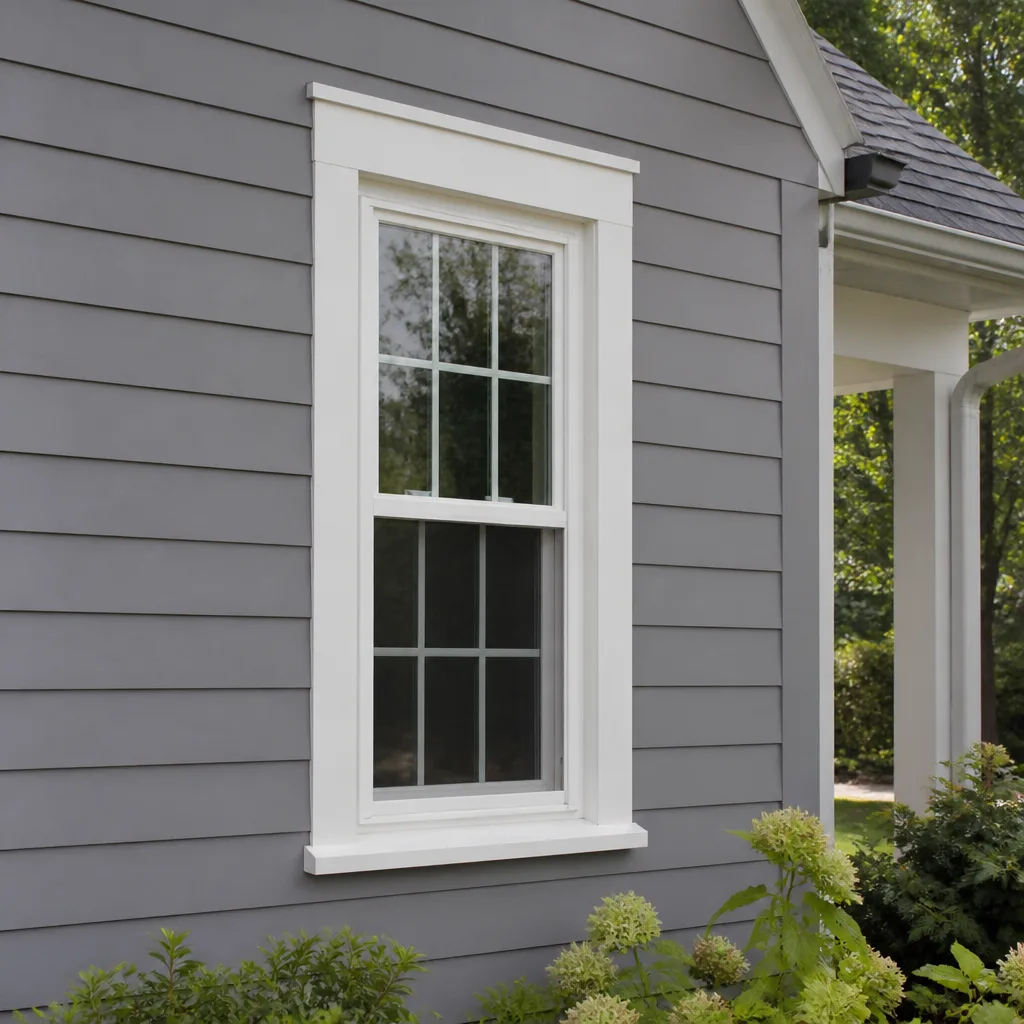 Single hung
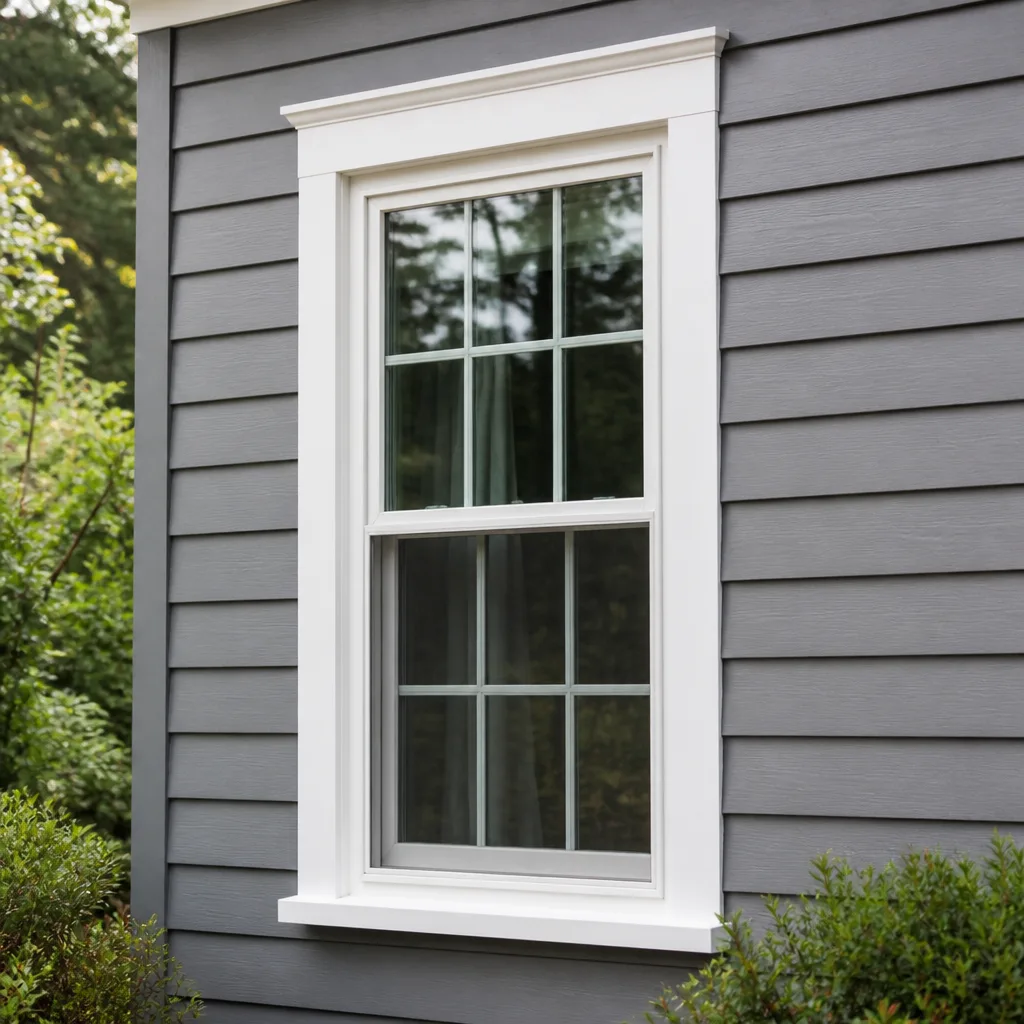 Double hung
 Horizontal roller
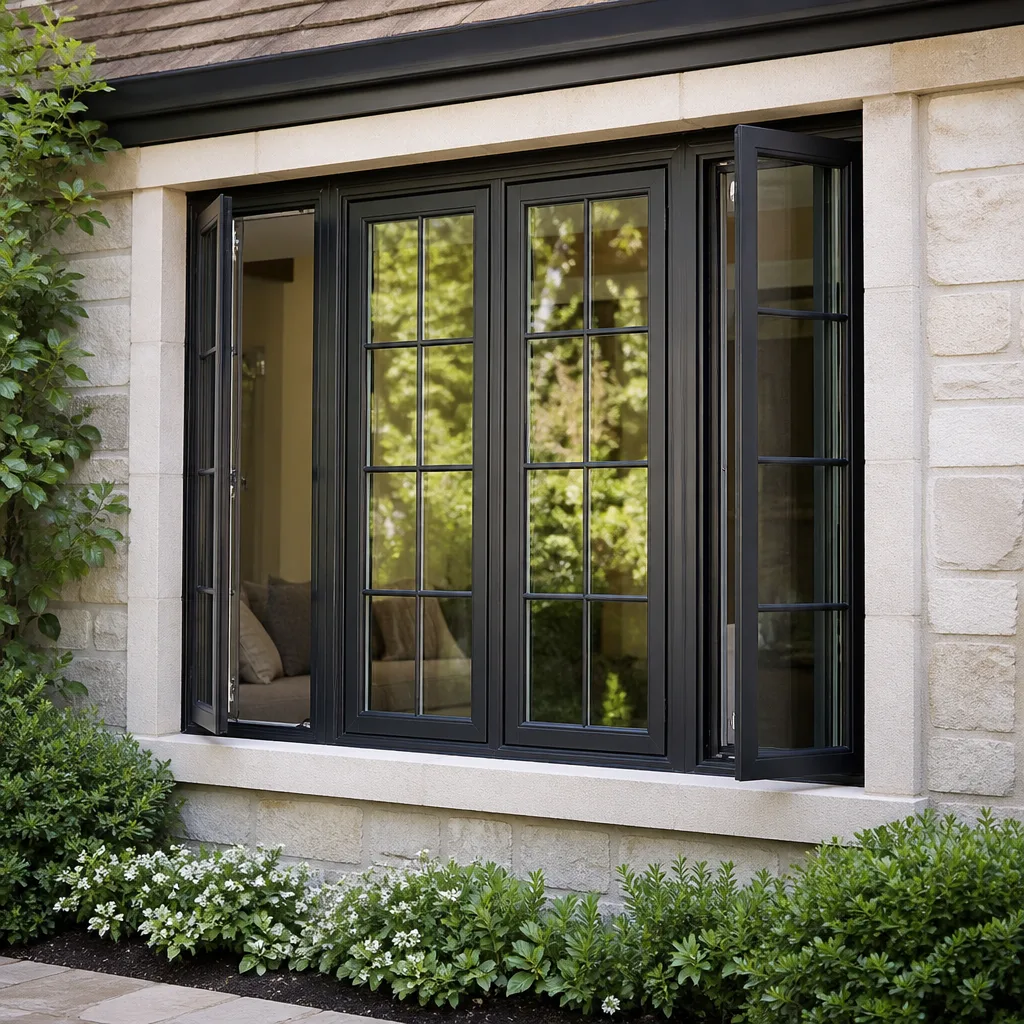 Casement
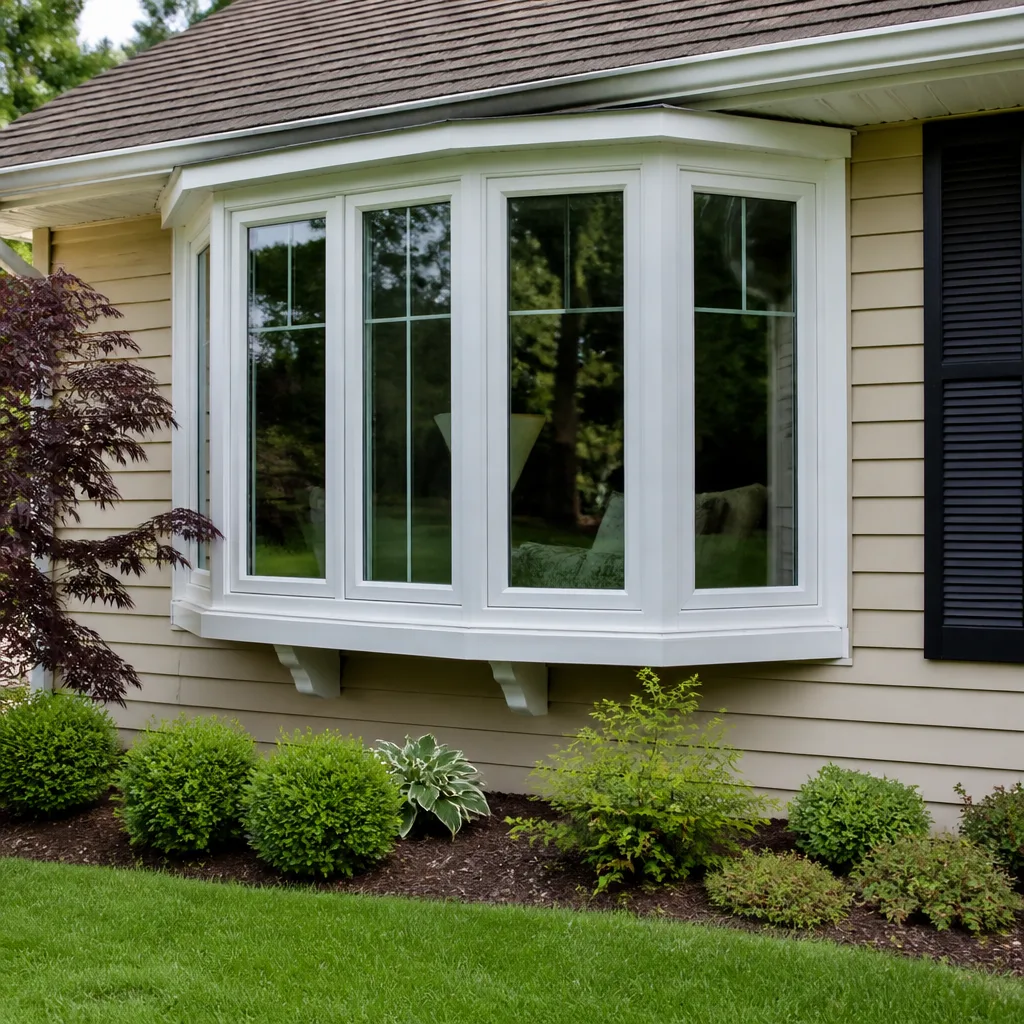 Bay & bow
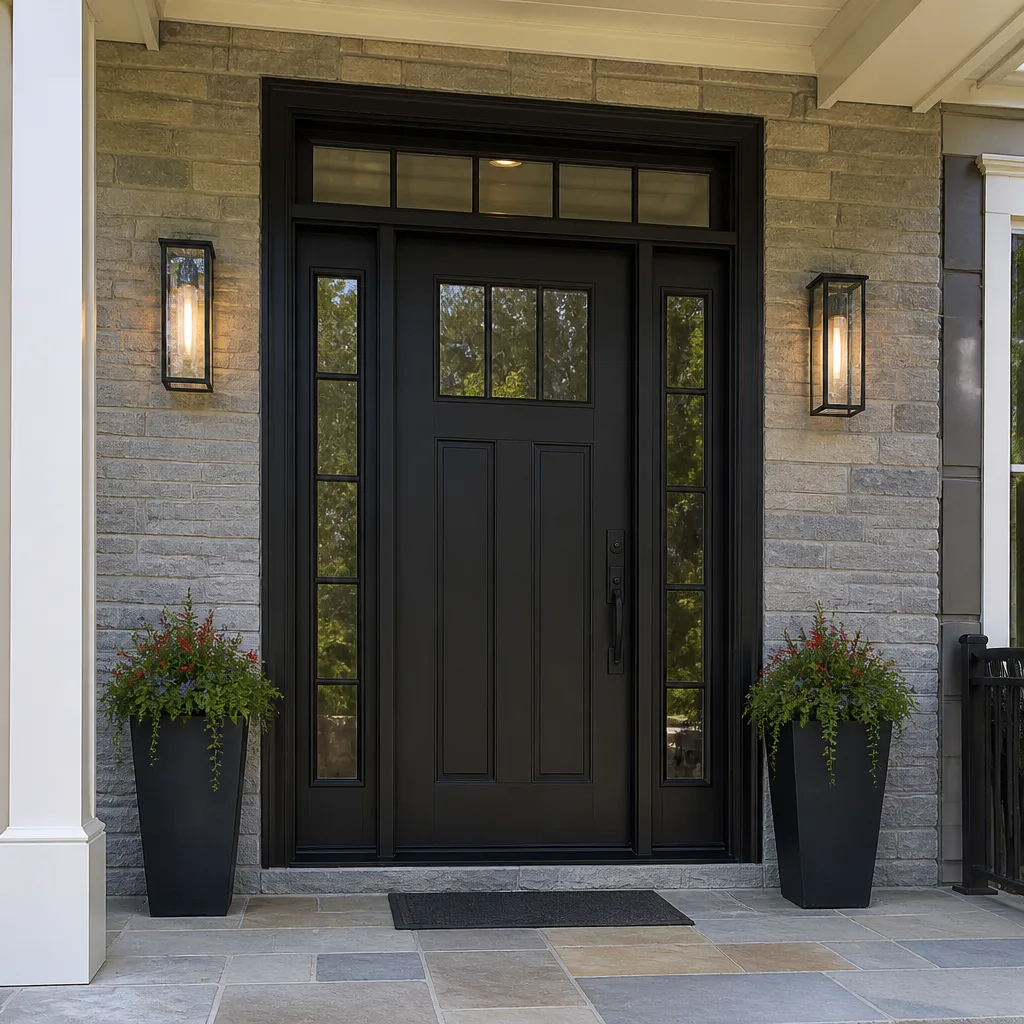 Entry doors
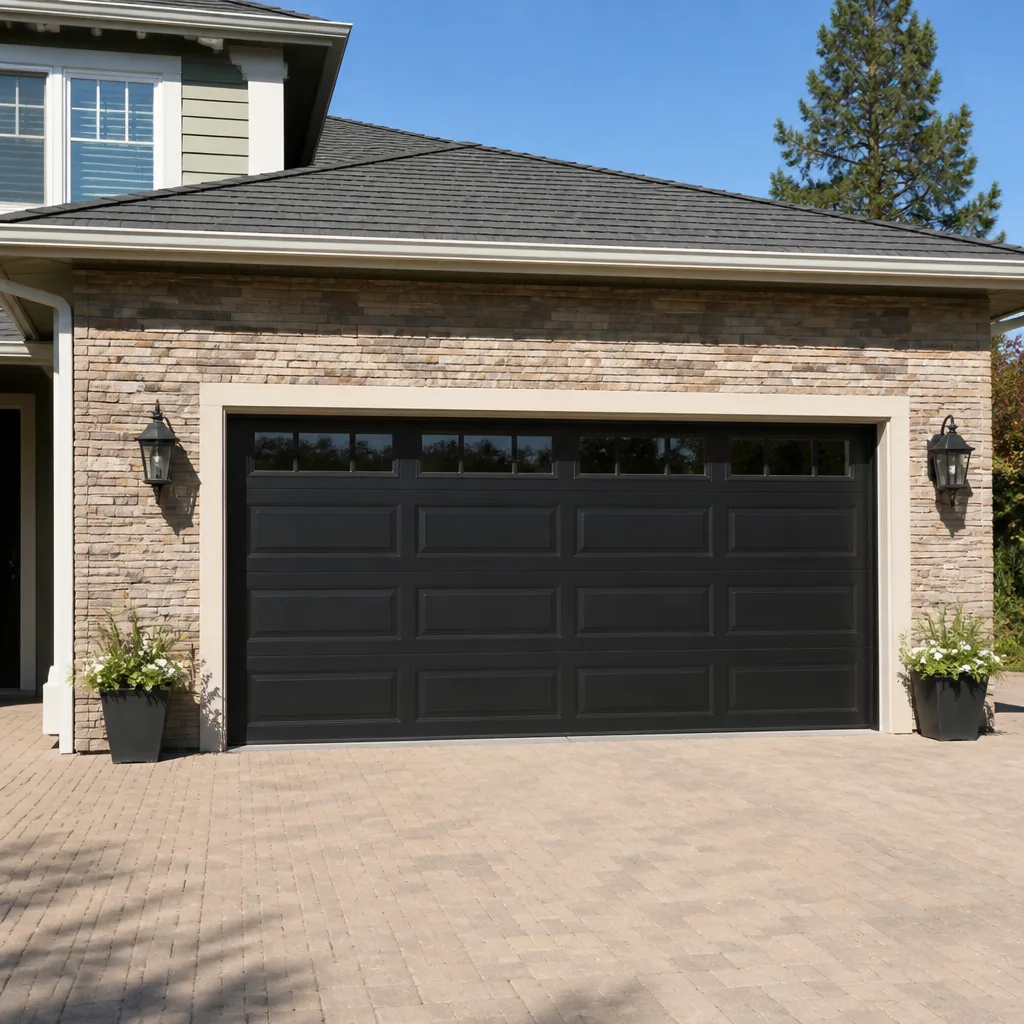 Impact garage doors
 PGT
 CGI
Free in-home measure and quote - PGT, CGI and CWS impact lines compared on your actual openings, style by style
Get your free estimateSeasonal Windows & Doors Care for Las Vegas: Year-Round Homeowner’s Guide
The window damage Las Vegas homeowners blame on summer heat usually started in February, when temperature swings of 40°F in a single day began quietly stressing seals that nobody checked after the last summer. That’s the part most homeowners miss. Las Vegas does have four seasons. None of them involve snow, so it’s easy to treat the whole year as one long, hot stretch and skip maintenance entirely until something fails.
Each season here creates a distinct threat to windows and doors, and each one has a short, specific response. In this guide we’ll walk through what to inspect in spring, summer, fall, and winter, why the dry cold of a Las Vegas winter does more seal damage than most people expect, and how to fit all of it into a handful of afternoons a year. You’ll finish with a seasonal task list you can post in the garage and work through without turning it into a weekend project.
Quick Answer
Windows and doors in Las Vegas need four short maintenance passes a year rather than one big annual checkup: thermal-expansion and weep-hole inspection in spring before monsoon season, UV and water-intrusion checks in summer, weatherstripping and hardware work in fall before the dry winter sets in, and caulk and door-seal inspection in winter when the desert cold cracks what the heat loosened. Each pass takes roughly 30 to 90 minutes. The biggest payoff comes in spring, when catching a failed seal early costs far less than replacing the unit later.
Styles & brands we work with
- Single hung
- Double hung
- Horizontal roller
- Casement
- Bay & bow
- Sliding glass doors
- Entry doors
- Impact garage doors
- PGT
- CGI
Table of Contents
- Why Las Vegas Has Four Seasons for Your Windows
- Spring (March – May): Thermal Expansion and Weep Holes
- Summer (June – September): UV Oxidation and Monsoon Water
- Fall (October – November): Weatherstripping and Hardware
- Winter (December – February): Why the Dry Cold Cracks Seals
- Products That Hold Up in the Desert
- The One-Page Seasonal Task Summary
- Common Mistakes to Avoid
- When to Call a Professional
Why Las Vegas Has Four Seasons for Your Windows
The idea that a desert climate is easy on building materials gets repeated often and it’s wrong. Here’s what actually stresses a window in Las Vegas: extreme heat, wide day-to-night temperature swings, intense ultraviolet exposure, low humidity, and a short but intense monsoon season. Those forces don’t hit at the same time. They rotate, which is exactly why a seasonal approach beats a single annual inspection.
Think about what a frame goes through. On a summer day, the aluminum or vinyl on a south- and west-facing wall absorbs heat and expands. Overnight the same frame cools and contracts. Multiply that cycle by hundreds of days a year, and you start to understand why seals, caulk lines, and weatherstripping are the first things to give out, not the glass itself. Glass is tough. The materials sealing it into the frame are what age.
Then there’s the humidity divide. Most of the year the air in Las Vegas is remarkably dry, which pulls moisture out of caulk, gaskets, and wood trim until they shrink and crack. During monsoon season the opposite happens: hard, wind-driven rain arrives after months of dry heat, and it finds every gap the dry spell opened. A seal that looked fine in June can let water into the track in August.
The seasons we describe here are real and predictable. When you align your maintenance to them instead of to a calendar of generic “annual checkup” advice, you’re working with the climate rather than reacting to it. That’s the entire logic of this guide. Everything below is about matching a short task to the threat of the moment, so nothing compounds into a replacement you didn’t plan for.
Spring (March – May): Thermal Expansion and Weep Holes
Spring is the highest-return maintenance window of the year in Las Vegas, and almost nobody treats it that way. That’s because spring sits between the dry, mild months and the heat, and it comes right before monsoon season. Any seal, gap, or drain problem you find and fix now gets addressed before the rain and before the worst of the sun. Wait until summer and you’re fixing things under pressure.
The single most useful spring task is inspecting thermal-expansion gaps. As frames move through the temperature swings of late winter and early spring, the caulk line between the frame and the wall can crack. You’re looking for hairline cracks, gaps, and any spot where the caulk has pulled away from the frame or the stucco. Run a finger or a thin tool along the joint. If it catches, there’s a gap.
The second task is clearing weep holes. Every window and sliding door has small drainage channels or slots, usually in the bottom of the frame or track, that let water escape. In Las Vegas they fill with dust, sand, and grit over the dry months. A blocked weep hole defeats the entire drainage design of the unit, and monsoon water has nowhere to go but into the wall or the track. Clearing them takes minutes.
Work through spring in this order:
- Walk the exterior of every window and sliding door with a flashlight and inspect the caulk line at the frame-to-wall joint for cracks and pull-away.
- Clear every weep hole and drainage channel with a stiff brush or a short piece of wire, then flush with water and confirm it drains.
- Open every operable window and sliding door and check that the track is clean and the unit slides or swings freely.
- Note anything that needs a closer look, and mark it so you don’t forget by summer.
This pass takes about 60 to 90 minutes for a typical home. If you find cracked caulk, that’s a fast fix. If you find a cracked frame or a seal that has already failed between the panes, that’s a sign the unit itself is at the end of its life, and it’s worth getting an honest comparison before summer. If you’re weighing repair against window replacement, spring is the right season to ask the question, because you have time to make the decision without heat pushing you into it.
Summer (June – September): UV Oxidation and Monsoon Water
Summer is when Las Vegas tests its windows hardest, and it brings two different problems at once: the sun and, in monsoon season, the rain. The sun arrives first and does its damage slowly. Monsoon rain arrives fast and finds whatever the sun and dry air have already loosened. Both need a specific inspection.
Spotting UV-induced frame oxidation early
Ultraviolet light breaks down the surface of vinyl and painted aluminum frames over time. What you’re looking for is a chalky, faded, or powdery surface on the sun-facing side, usually the south and west faces. Rub a thumb along the frame. If it comes away with white or gray residue, the surface is oxidizing. Left alone, oxidation eventually leads to a brittle surface and a frame that no longer takes and holds a finish as well. Catching it early means it’s cosmetic. Catching it late means it’s structural.
Glass seals are the other summer item. On a double-pane unit, a failed seal shows up as fogging, condensation between the panes, or a hazy film that won’t clean off from the outside. That’s not dirt. It’s the argon or air gap compromised, and the insulation value is dropping while you look at it. Once that happens, the unit needs to be replaced; the seal can’t be repaired in place.
Managing monsoon water intrusion through tracks
When hard monsoon rain hits, water can push past the exterior seal and into the track of a sliding door or window. A little water in the track during a heavy storm is normal if it drains. Water that pools, sits, or reaches the interior is not. If you see standing water, the first suspect is a blocked weep hole you missed in spring, and the second is a worn seal or sill. Clean the track, confirm it drains, and watch it during the next storm to see whether the problem repeats.
Checking screen frames for warp
Heat also warps screen frames, especially aluminum frames on sun-facing windows. A screen that used to sit flush and now bows, doesn’t seat in the track, or lets insects around the edge is usually warped rather than broken. Check every screen by pressing gently against the frame along its length. A bowed frame should be replaced, not bent back into place, because it will re-warp in the next heat wave.
Summer inspections take about 30 to 45 minutes and are mostly looking: frame surface, glass seals, tracks after a storm, and screens. When a unit has genuinely failed and you’re deciding what goes back in, this is the moment to ask which products suit a west-facing wall in full sun. That’s where a specialist’s range matters. Our access to impact-rated and energy-efficient lines like window installation options from ECO Window Systems and ES Windows lets us match the glass and frame to the exposure rather than hand you whatever’s in stock.
Fall (October – November): Weatherstripping and Hardware
Fall is the overlooked season in Las Vegas, and it’s costing homeowners every winter. The logic is simple: nothing’s boiling and nothing’s raining, so it feels like there’s nothing to do. But fall is the last comfortable window before the dry cold sets in, and it’s the right time to replace worn weatherstripping and lubricate hardware. Do it now and the seals are fresh when the cold arrives. Skip it and the cold will find every gap you didn’t close.
Weatherstripping replacement
Weatherstripping is the flexible seal around the perimeter of a door or a window sash that keeps air and dust out. It wears out quietly. The signs: you can see daylight around a closed door, you feel a draft near the edges, the strip has flattened or cracked, or it’s pulled loose from its channel. In this climate, the combination of heat and dry air ages weatherstripping faster than most homeowners expect, so a strip that was installed a few years ago may already be flattened at the latch side where it sees the most contact.
Replacing weatherstripping is one of the few window and door tasks that’s genuinely within a homeowner’s reach, provided the strip is a standard profile and the door itself is sound. Run a hand around the closed perimeter. Feel for cool air, gaps, or hard spots. If the seal is compressed and stiff, replace it. Choose a strip rated for exterior use and a climate with heat; a light-duty interior strip won’t last.
Hardware lubrication
Sliding door rollers, window sash tracks, and locking mechanisms all benefit from a small amount of lubrication before winter. Dusty tracks and dry moving parts get stiff, and a stiff lock or roller puts strain on the frame every time it’s used. Clean the track first, then apply a light, dry lubricant sparingly. Over-lubricating attracts dust, so a little goes a long way. Test every lock, every handle, and every roller after.
Fall tasks take about 45 to 60 minutes. If you discover that a door frame is warped or that a sliding door no longer rolls because the rollers are failing, that’s beyond weatherstripping and it’s worth a professional look before winter. A worn sliding door can often be repaired rather than replaced. The point of the fall pass is to find out which one you’re dealing with.
Winter (December – February): Why the Dry Cold Cracks Seals
Las Vegas winters surprise homeowners from other climates. They’re mild by most standards, but “mild” here still means cold nights, dry air, and a wide swing between afternoon highs and overnight lows. That combination is harder on caulk and door seals than many people realize. Dry cold pulls moisture out of seals and caulk until they shrink, stiffen, and crack. Heat had already loosened them; the cold finishes the job.
The two spots that fail first are exterior caulk lines and door seals, especially the bottom sweep on exterior doors. A door sweep that’s cracking or stiff lets cold air and dust in and, more importantly, is a gap that will open further over the year. Winter is the time to inspect both and replace what’s failing.
What holds up in dry cold matters. Standard interior-grade caulk will crack in a single winter here. What lasts is a flexible exterior sealant rated for a broad temperature range, applied to a dry, clean surface. On doors, a flexible sweep or seal that stays pliable in cold performs far better than a rigid one. These are not exotic products; they’re the right ones for the climate, and asking for them specifically is the difference between a fix that lasts a season and one that lasts.
Winter inspection is the shortest of the four, about 30 to 40 minutes:
- Run a hand along every exterior door seal and bottom sweep, checking for cracks, stiffness, and gaps.
- Inspect exterior caulk lines on windows and doors, especially any joints that were fine in fall.
- Open and close every door and window once, listening for a firm seal on closing.
- Replace any cracked caulk or stiff sweep, and note anything that looks like it needs a professional.
This is also the season to notice interior drafts that weren’t there in summer. A draft in winter at a window or door in Las Vegas is often a seal or weatherstrip problem, not a framing problem, and a professional can tell you which before you spend money on the wrong fix. If you’re looking at an entry door that’s lost its seal entirely, a replacement may be the better answer than another sweep. That’s where premium door lines like Therma-Tru (which we’re authorized to supply and install) earn their keep, and a specialist in Jasper Windows & Doors can compare the door and the frame together rather than guessing at one.
Products That Hold Up in the Desert
Which window or door you choose matters all year, but it matters most in the seasons we’ve just walked through. The desert compounds heat, UV, and thermal swing, and some products weather that far better than others. When you’re shopping, ask about the frame material, the glass package, and how the seal is built, not just the color and the price.
A few specifics to look for:
- Frame material: look for a frame rated for exterior heat and UV exposure. Vinyl and thermally broken aluminum are common choices, and both need to be specified for a hot, sunny climate.
- Glass package: a low-E coating and a sealed, gas-filled gap are what keep a south- or west-facing room comfortable. A failed seal is the most common reason a double-pane unit underperforms.
- Impact and storm rating: if your home needs storm, wind, or code-compliance performance, ask for it explicitly. Impact-rated lines from PGT, CGI, and ECO Window Systems are built for that role.
- Door construction: entry doors take UV and dry cold head-on. A door built with a durable exterior face and a proper seal outlasts a light-duty model.
This is where having more than one brand to compare matters. Jasper carries eight manufacturer lines, including CWS, ES Windows, ECO Window Systems, Mr-Glass, Therma-Tru, ViewLux, PGT, and CGI. That breadth exists for a reason: it means we can put two products’ specifications side by side and recommend based on what your home actually needs, not what we happen to stock. A single-brand dealer can only recommend the brand they carry. We can tell you which of the eight fits a west-facing wall in full sun and which of them fits your budget without over-selling.
We also handle the whole exterior job in one place: window replacement, window installation, and door installation. You don’t coordinate three contractors for one upgrade, and you don’t have a generalist guessing at glass. Every job we take on is in the same product category, and our technicians have up to 10 years of experience specifically in windows and doors. If you’re planning a replacement and want to compare products honestly, call (844) 761-6772. The estimate is free.
The One-Page Seasonal Task Summary
Post this in the garage. It’s the whole guide in one table, with realistic time estimates so nothing feels like a project. You can run every task yourself in most cases, and the ones that need a professional are noted. Together they add up to about four short afternoons a year, or under five hours total.
- Spring (March – May) – 60 to 90 min: Inspect thermal-expansion gaps and caulk lines with a flashlight; clear every weep hole and drainage channel; confirm tracks drain; note anything for later.
- Summer (June – September) – 30 to 45 min: Check north- and west-facing frames for chalky UV oxidation; look for fogging between panes; clear water from tracks after storms; check screens for warp.
- Fall (October – November) – 45 to 60 min: Replace worn weatherstripping and door sweeps; lubricate sliding door rollers and locks with a dry lubricant; test every lock and handle.
- Winter (December – February) – 30 to 40 min: Inspect exterior caulk lines and door seals; replace cracked caulk and stiff sweeps; check for drafts at windows and doors.
- Year-round: After any heavy wind or dust event, check tracks and weep holes again. Clean glass and frames with a mild cleaner; avoid harsh abrasives that strip protective finishes.
The order matters more than the timing. Spring’s caulk and weep-hole pass protects you before monsoon season. Fall’s weatherstripping and lubrication protect you before the cold. Both are preventive, and both are cheap next to replacement. If you follow only two of the four passes, make them spring and fall.
Common Mistakes to Avoid
- Treating Las Vegas as one long summer. The dry cold of winter and the monsoon rain of late summer are separate pressures, and skipping either season’s pass means finding the damage later. Each season has its own fix; do them in order rather than trying to cram them into one annual job.
- Ignoring weep holes. They’re small, easy to forget, and the single most common cause of monsoon water intrusion. Check them every spring and again after any big dust or wind event. If a track is holding water, the weep hole is the first place to look.
- Re-caulking over an old, dirty joint. A new bead over a dirty, cracked line fails fast. Clean the surface, remove as much old caulk as you can, and use an exterior sealant rated for a wide temperature range. It’s the difference between a fix that lasts a season and one that lasts.
- Missing early UV oxidation. A chalky frame surface is easy to dismiss as ordinary wear. Catch it early and it’s a cosmetic fix; leave it and the finish deteriorates. Rub a thumb along the sun-facing frame once a year and check the result.
- Using the wrong lubricant on tracks. A wet grease picks up dust and grit and turns the track into a grinding paste. Use a light, dry lubricant and apply it sparingly. Over-lubricating causes more problems than it solves.
- Confusing a worn screen with a warped one. A screen that’s bent back into place re-warps in the next heat wave. If a frame bows, replace it. Don’t try to force it flat; you’ll only damage the glass or the track.
- Delaying replacement on a fogged double-pane unit. Once the seal between the panes has failed, the insulation is gone and no amount of cleaning fixes it. Plan the replacement in spring or fall, before the hot months add pressure to the decision.
When to Call a Professional
Most of the seasonal care in this guide is yours to run. A few situations call for a professional on the first sign, not later. Call when you find a double-pane window that’s fogged or showing condensation between the panes; when you find cracked caulk or a failed seal that keeps returning despite your fixes; when a sliding door no longer rolls because the rollers have failed or the frame has warped; when a door seal has failed at the frame rather than just the sweep; or when you’re deciding between repair and replacement and want an honest comparison before you commit.
Call, too, if you’re simply not sure whether what you’re seeing is surface wear or a real problem. A trained eye can sort that in minutes and save you from a wrong repair. Jasper Windows & Doors offers free estimates in Las Vegas – call (844) 761-6772. We answer 24/7. Fast dispatch from 7am to 7pm, Sunday through Friday. Estimates are free, quotes are written line by line, and we can compare products from our eight manufacturer lines so you get the right window for your home, not the one we happen to have in stock.
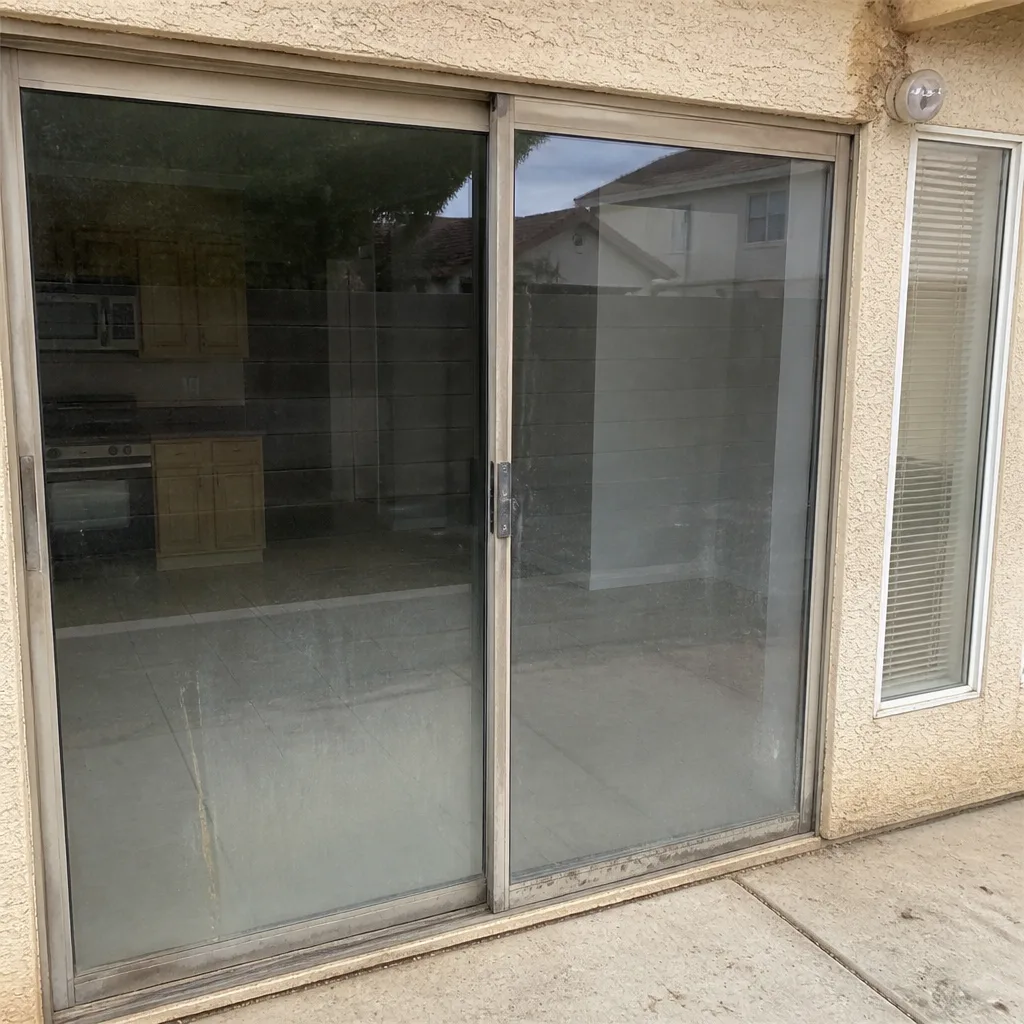
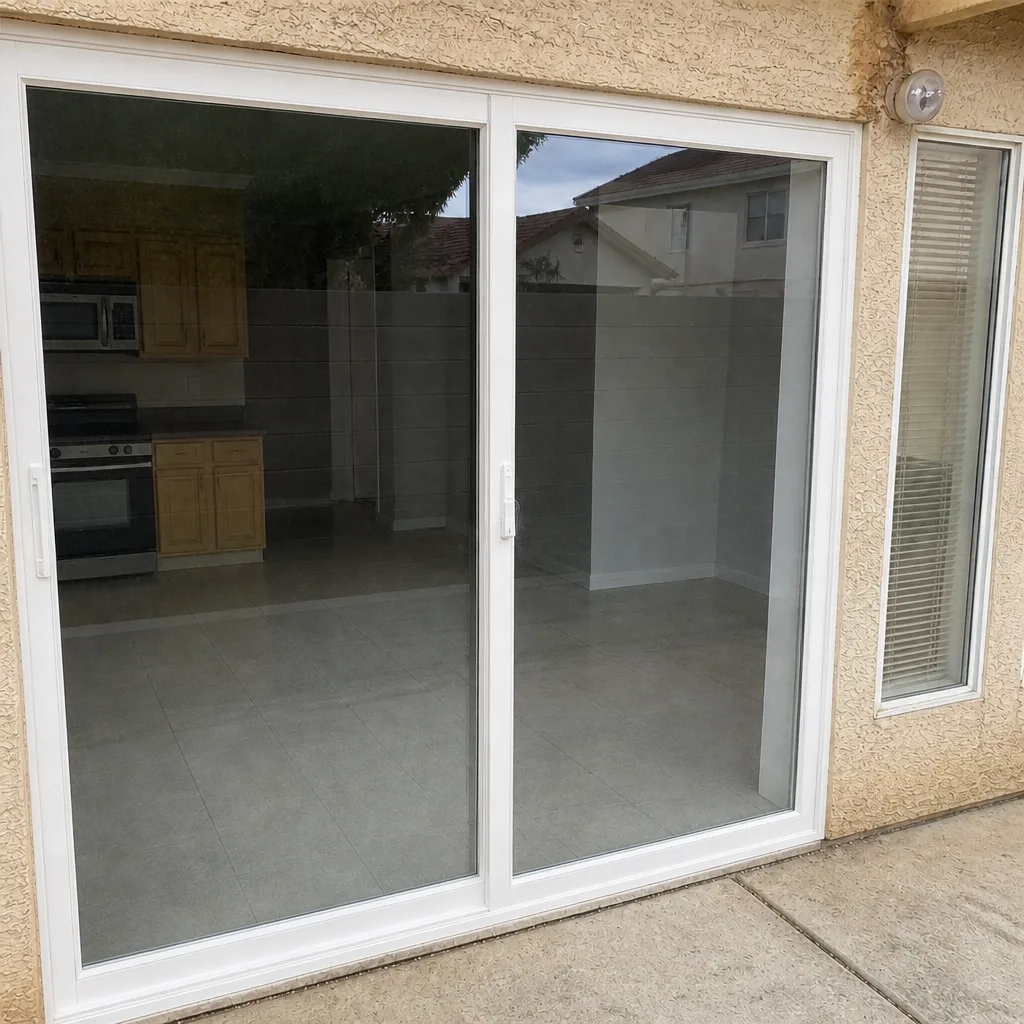
See the difference
 Before
 After
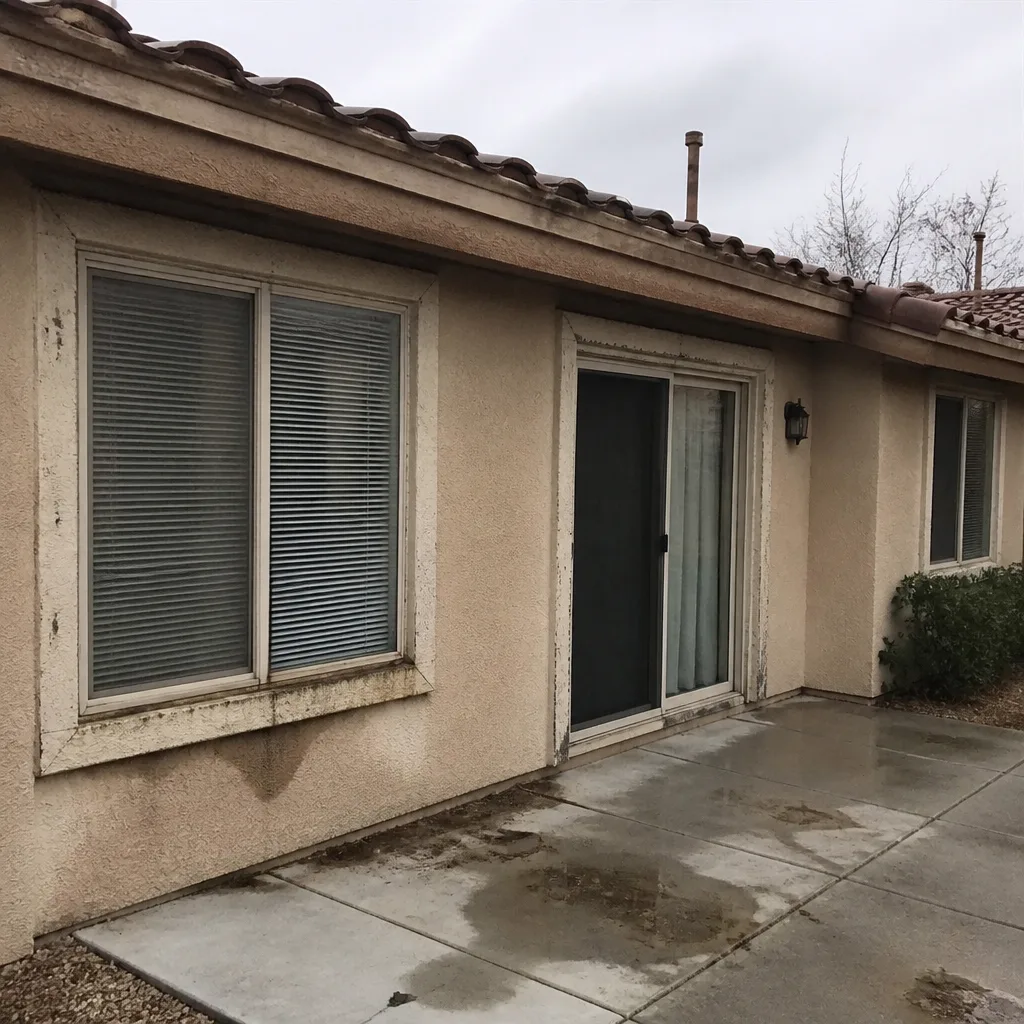 Before
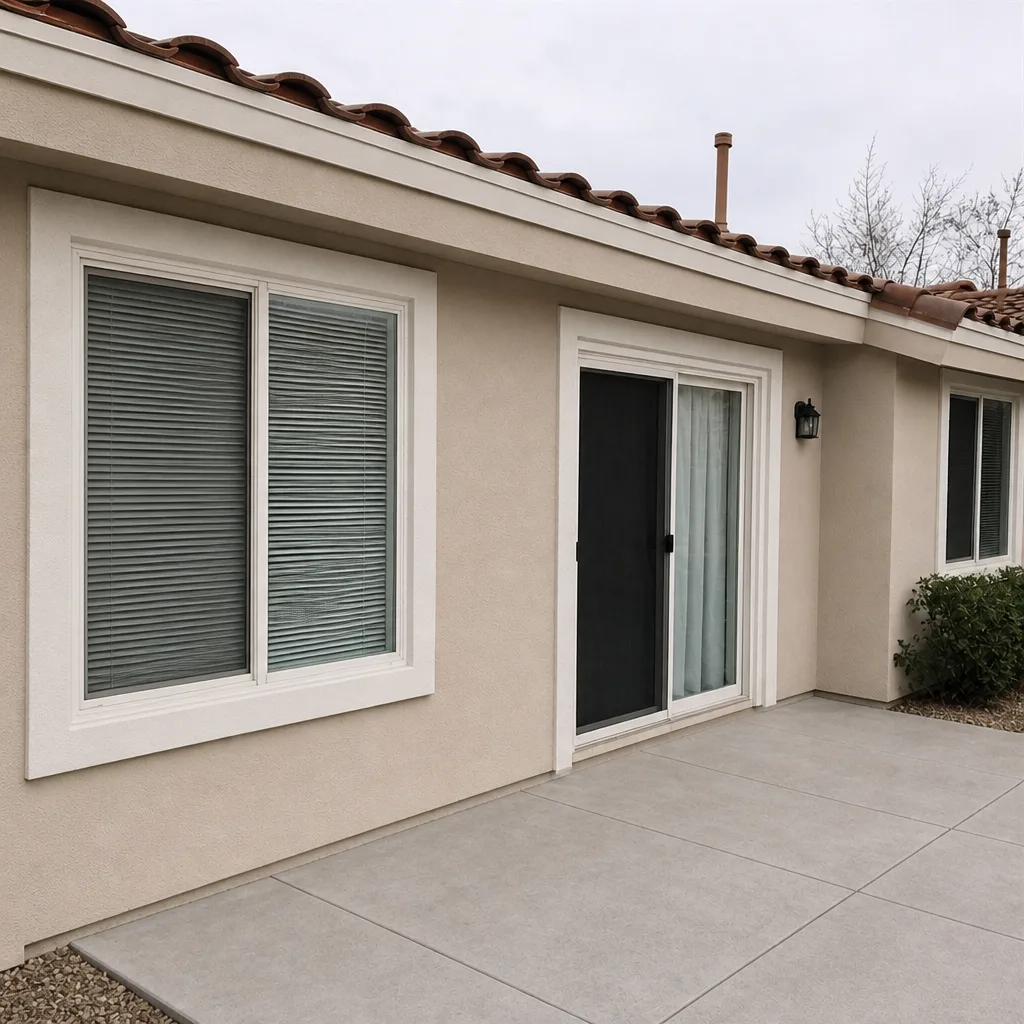 After
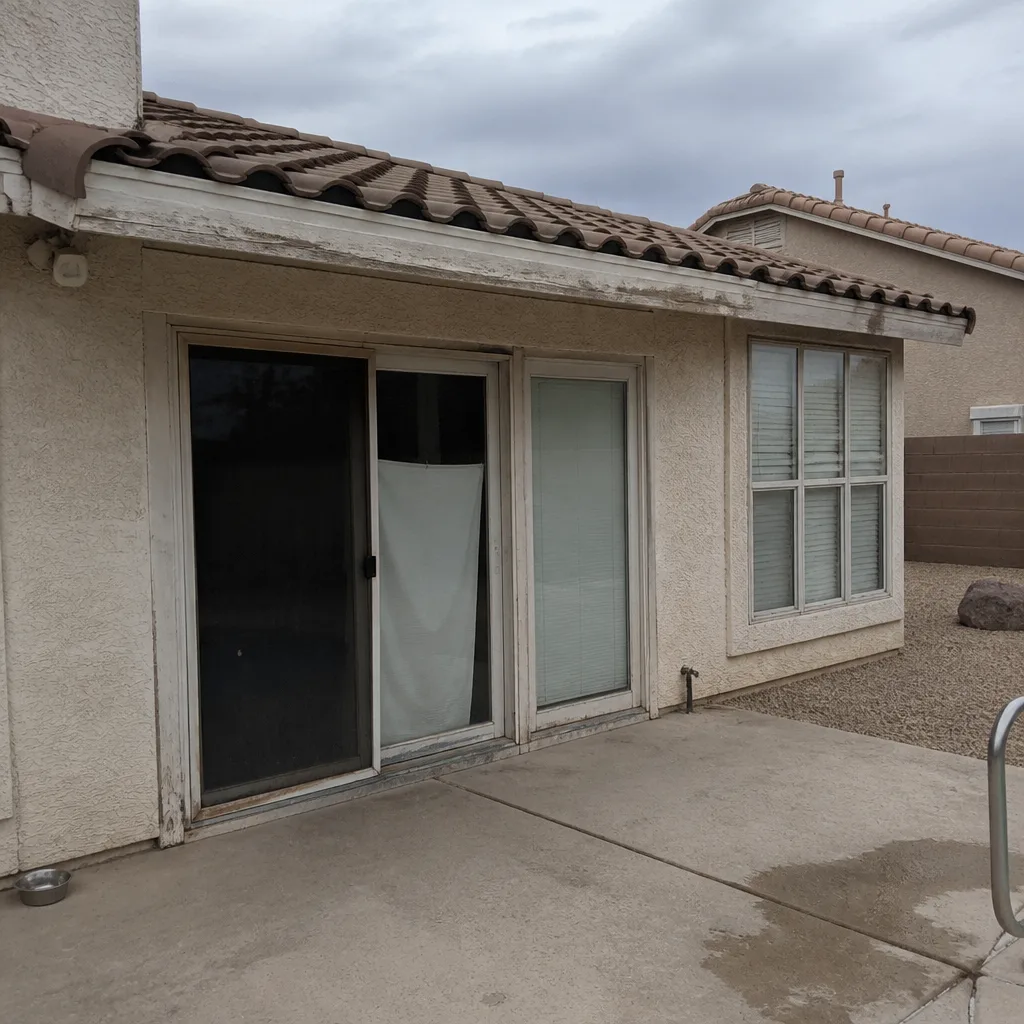 Before
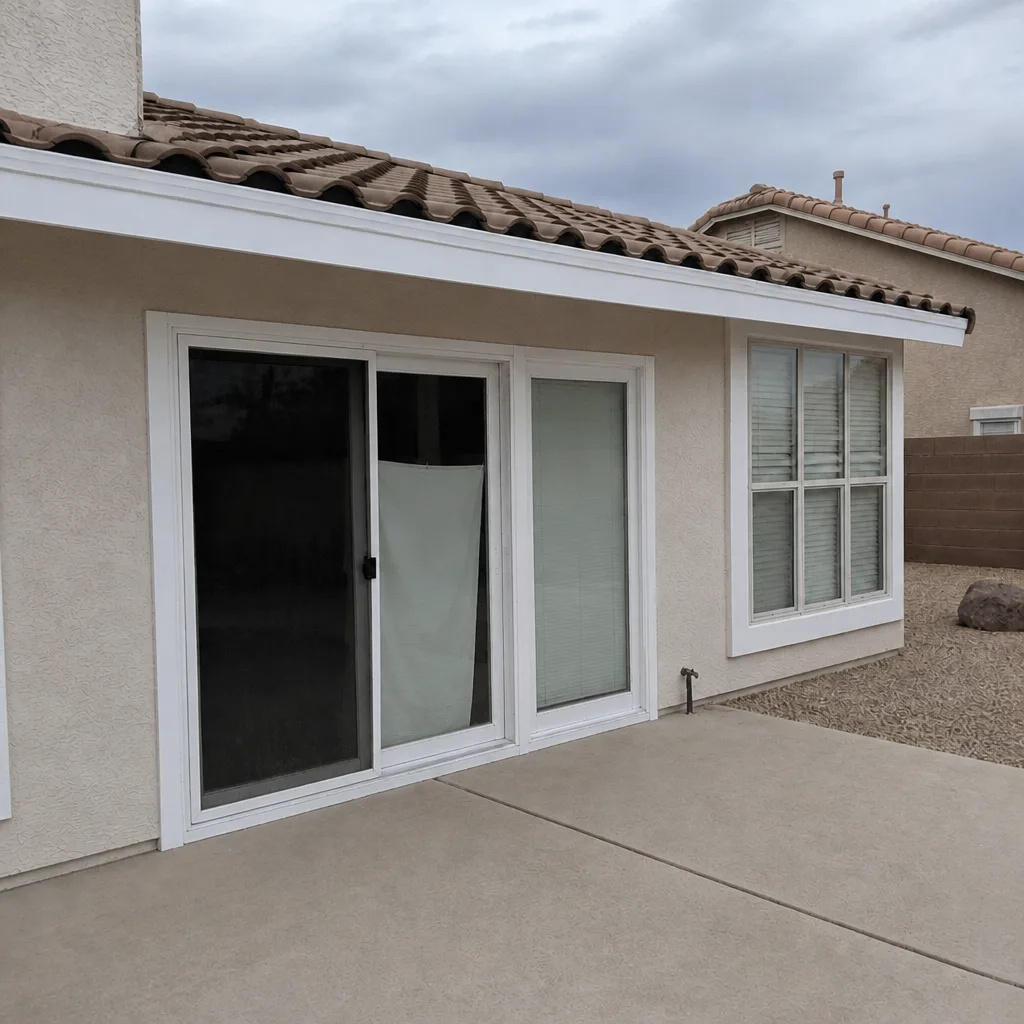 After
Frequently Asked Questions
Four short passes a year, one per season, instead of one annual checkup. Spring and fall are the two to prioritize: spring catches thermal-expansion gaps and clears weep holes before monsoon season, and fall replaces weatherstripping and lubricates hardware before the dry cold arrives. Each pass takes roughly 30 to 90 minutes. The seasonal list in this guide is the whole program, and you can run it yourself in most cases. For an exact quote on a repair or replacement, call (844) 761-6772 – estimates are free.
A double-pane window fogs between the panes when the seal that holds the gas-filled gap has failed, and hot, intense UV exposure in Las Vegas accelerates that failure. Once the seal is broken, the insulation value drops and the fog won’t clean off from the outside. The unit needs to be replaced; the seal can’t be repaired in place. Ask a specialist to confirm before you plan the replacement. Call (844) 761-6772 for an exact quote – estimates are free.
UV-induced oxidation shows up as a chalky, faded, or powdery surface on the sun-facing side of the frame, usually the north- and west-facing faces. Rub a thumb along the frame: if it comes away with white or gray residue, the surface is oxidizing. Ordinary wear is usually scratches, dents, or a dull finish, not a powder. Catch oxidation early and it’s cosmetic; leave it and the finish deteriorates. Call (844) 761-6772 to have it looked at – estimates are free.
Clear weep holes, intact exterior caulk, and a properly sealing track protect your windows through monsoon season. Weep holes let water escape, caulk keeps it from entering the wall, and a clean track lets it drain. Check all three in spring, and again after any heavy wind or dust event. If water pools in a track or reaches the interior during a storm, the weep hole or the seal above the sill is the first place to look. Call (844) 761-6772 for an exact quote – estimates are free.
You can replace standard weatherstripping yourself if the door is sound and the strip is a common profile. The signs it needs replacing are daylight around a closed door, a draft at the edges, or a strip that’s flattened, cracked, or pulled loose. If the door frame is warped, or a sliding door doesn’t roll because the rollers have failed, that’s a professional repair rather than a strip swap. Call (844) 761-6772 for an exact quote – estimates are free.
Spring and fall are the best seasons to replace windows in Las Vegas, because the mild temperatures make the work comfortable and give you time to make the decision without heat or rain pushing you. Summer can be done, but there’s no reason to wait for it if a unit has failed in the spring pass. Fall is the last comfortable window before the dry cold. If you need to compare products, we can lay two side by side. Call (844) 761-6772 to schedule your free estimate.
The Bottom Line
Las Vegas has four seasons for your windows and doors, even if none of them involve snow, and each one has a short, specific task attached to it. Spring is the highest-return pass – inspect thermal-expansion gaps and clear weep holes before monsoon season. Summer is about UV oxidation, panes that fog, and water in tracks. Fall replaces weatherstripping and lubricates hardware before the dry cold. Winter checks caulk and door seals that the cold will crack. Post the one-page task summary in the garage, run two passes a year at minimum, and call a specialist when a seal has genuinely failed. It’s cheaper than replacing a unit you could have saved.
If you’re planning a replacement or deciding between repair and a new unit, call Jasper Windows & Doors at (844) 761-6772 for a free estimate. We answer 24/7. Fast dispatch from 7am to 7pm, Sunday through Friday. Eight trusted lines, one specialist team, and a recommendation driven by your home rather than our inventory.
Written by the team at Jasper Windows & Doors.