Last updated November 16, 2026
 Sliding glass doors
 Single hung
 Double hung
 Horizontal roller
 Casement
 Bay & bow
 Entry doors
 Impact garage doors
 PGT
 CGI
Free in-home measure and quote - PGT, CGI and CWS impact lines compared on your actual openings, style by style
Get your free estimateWindows & Doors Emergency Preparedness Guide for Las Vegas Homes
Most emergency guides sitting in Las Vegas desk drawers were written for somewhere else. They tell you to brace for earthquakes, clear defensible space from wildfires, and shovel the walk. Useful in their own way, but none of them mention the wall of dust that can swallow the Strip in under five minutes, or the monsoon microburst that turns a calm afternoon into a wind event strong enough to test every latch and seal in your house. The real threat to your windows and doors around Las Vegas is wind and heat, not shaking ground. This guide covers what actually fails here, how to check your home before storm season, and what to do in the hours after a blowout.
Quick Answer
Preparing your windows and doors for emergencies in Las Vegas means three things: knowing whether your openings are rated for the wind loads this valley produces, running a short pre-season check on latches, tracks, and seals, and keeping a photographic record of condition so an insurance dispute after a haboob doesn’t turn into your word against an adjuster’s. Most of the work is inspection and documentation you can do yourself. Repairs and upgrades to glass, frames, and door systems should go to a specialist.
Styles & brands we work with
- Single hung
- Double hung
- Horizontal roller
- Casement
- Bay & bow
- Sliding glass doors
- Entry doors
- Impact garage doors
- PGT
- CGI
Table of Contents
- Why Haboobs and Monsoons Test Your Windows and Doors
- How to Find Your Home’s Wind-Load Rating Without Calling Anyone
- Monsoon Season Prep: The Two-Minute Window and Door Check
- What to Inspect Immediately After a High-Wind Event
- Managing Interior Heat When the Power Fails in 115°F Weather
- Documenting Window and Door Condition for Insurance Claims
- Common Mistakes to Avoid
- When to Call a Professional
Why Haboobs and Monsoons Test Your Windows and Doors
A haboob is a dust storm pushed ahead of a collapsing thunderstorm cell, and in Las Vegas it can take visibility from clear to near zero in a matter of minutes. The dust is the visible part. The wind pressure is what damages homes. A sliding glass door that looks closed but isn’t fully seated in its track becomes a pressure leak, and once wind-driven dust and rain find that gap, interior damage follows fast. The valley saw this play out across neighborhoods during the summer of 2023, when a strong dust event left homes with dust infiltration, water intrusion around door frames, and coverage disputes because the opening wasn’t rated for the load it took.
Two distinct forces work on Las Vegas homes. The first is sustained wind with gusts, which pushes against the glass and frame. The second is negative pressure on the leeward side of the house, which can pull seals outward. A door that’s weather-tight in calm conditions can still fail under that combination if the latch hardware isn’t engaged properly or the weatherstripping has aged out.
Rain matters too, even in a desert. Monsoon storms deliver intense bursts in short windows, and the water doesn’t fall straight down. It arrives nearly horizontal, driven against the north and east elevations of many Las Vegas homes. That’s why wind-driven rain finds gaps that a garden hose test never would. We’ve inspected plenty of openings that looked fine until the homeowner described water tracking down the inside of a frame after a monsoon cell.
None of this is cause for alarm. It is cause for preparation, and preparation here is simpler than most people expect once you know what to check.
How to Find Your Home’s Wind-Load Rating Without Calling Anyone
You can usually determine what your windows and doors were rated for by reading the documents you already have. Wind-load ratings are set by building codes, and the rating for a given opening reflects the design wind speed for the address. Start with these sources:
- Your home’s construction documents or permit file. If your home was built or re-windowed under a permit, the window schedule and product specifications may be in your records. Las Vegas area building departments keep permit files, and many homeowners can pull copies or request them directly.
- The manufacturer label on the glass or frame. Most rated windows and doors carry a temporary or etched label identifying the product line and, on some lines, the design pressure rating. Look along the top or bottom frame edge and on the glass corner.
- Your inspection report from purchase. A home inspection usually notes the window and door type, and sometimes the rating if the inspector photographed the label.
- The product data sheet for the brand. If you know the brand and model, the manufacturer publishes design pressure and structural ratings. This is straightforward for lines like ECO Window Systems or ViewLux, which document their specs clearly.
If none of those turn up the answer, that’s your signal. An unrated or unverified opening isn’t automatically a problem, but it means you don’t know how the assembly will behave under gust loading, and that’s the detail insurance carriers tend to press on after storm damage. Knowing the rating is the difference between a confident conversation with your adjuster and an argument you can’t win.
One more point: ratings are per opening, not per house. A home can have impact-rated glass in the great room and builder-grade sliders in the primary bedroom. Check each one you care about, and write it down.
Monsoon Season Prep: The Two-Minute Window and Door Check
Before monsoon season, every homeowner in Las Vegas can run a fast inspection that catches the most common failure points. It takes about two minutes per opening the first time, and less after that.
- Latch and lock every operable window and door. A latch that seats loosely is not a closure. Feel whether the lock engages with a firm, positive stop. On sliders, make sure the secondary lock or pin is engaged, not just the primary latch.
- Look at the tracks. Clear dust, sand, and grit from slider tracks and window channels. A track packed with fine dust prevents the sash from seating fully, and a sash that won’t seat is a wind entry point. Vacuum and wipe, then test the operation.
- Inspect weatherstripping and sweeps. Run a fingertip along the perimeter seal. Look for gaps, cracks, hardening, or sections pulling away from the frame. Weatherstripping in our heat takes a beating and should feel pliable.
- Check the weep holes. Window and door frames have small drainage holes that let water escape. Make sure they’re open and not painted over or clogged with debris.
- Look for sealant failure. Caulk lines around extrusions and frames should be continuous, with no cracking or shrink gaps. Pay special attention to the corners.
- Test the door threshold. The gap at the bottom of an exterior door should be covered by a proper sweep or threshold seal that contacts the sill when the door is shut. If you can see daylight underneath, that’s your entry point for wind-driven rain.
- Check the interior side. Water marks, discoloration, or stains on interior drywall near a frame are history, not current events. They tell you where water has already entered.
Each of these checks is something you can do on your own, safely, without tools. If one turns up a repair, that’s when you bring in a specialist. A hardware adjustment or weatherstrip replacement often runs less than people expect, and getting it done before the season beats chasing dust out of your interior afterward.
Some homes around Las Vegas also have impact-rated or energy-efficient door systems, and those assemblies still need the same checks. The rating is a structural property; the seals and hardware are what determine whether it performs.
What to Inspect Immediately After a High-Wind Event
After a haboob or monsoon blowout passes, walk your home’s exterior and interior in a deliberate sequence. The order matters because the first thing you check tells you what to look for next.
- Start with the interior side. Before you go outside, look at every window and door from inside. Dust trails, water streaks, discoloration, or daylight through a gap tell you where the wind found its way in. Photograph what you see before wiping anything.
- Check the glass. Look for new chips, cracks, or starred impact points. Even a small chip from flying debris can propagate and compromise the pane.
- Inspect frames and seals. Look for gaps between the frame and wall, caulk separation, or sealant that has been displaced. Anything that’s lifted or opened is now a path for water and pests.
- Look at tracks and sliding hardware. A slider that operated smoothly before the storm and now drags or scrapes has debris or a shifted track. Check whether the panel still seats fully against its jamb.
- Examine the exterior roof edge above each opening. Wind-driven debris or displaced flashing above a window can cause water intrusion that appears at the window even though the window is fine.
- Note exterior conditions on every elevation. The wind-exposed side of your home will show more damage than the leeward side. Photograph each.
- Write down what you find with a date. This becomes your record, and you need it before you call anyone.
The most commonly missed step is the interior check. Homeowners typically run outside first, and by the time they come back in, dust and water have been cleaned up or dried, losing evidence that would have supported a claim or a repair decision. Once the interior walls have dried, the trail is gone.
If your inspection reveals seal displacement, frame gaps, or water entry, the repair belongs to a specialist. Those aren’t fixes to chase on your own.
Managing Interior Heat When the Power Fails in 115°F Weather
Losing power in a Las Vegas summer is a different kind of emergency than losing power somewhere cooler. Interior temperatures climb fast, and windows and doors become your thermal management system. A few decisions make a real difference.
- Close all window coverings on sun-exposed elevations. Radiant heat through glass translates directly into interior temperature rise. Solar shades, blinds, or heavy curtains on the west and south sides cut that load immediately.
- Check whether your windows have low-E or solar-control glass. Many Las Vegas replacement lines are built with solar heat gain in mind. If your openings were upgraded with an energy-efficient line, that’s a meaningful advantage in a power outage.
- Seal the envelope. Close every window, door, and slider fully. In a heat emergency, open windows don’t cool the house; they let hot air in. The goal is trapping whatever cool air you still have.
- Use exterior shading where you have it. Awnings, shade sails, or even a draped light-colored sheet over an exterior window can meaningfully reduce the solar load on that opening.
- Consolidate into one room. Pick the room with the least sun exposure and the best window performance, and close the door to it. This is where you and your family stay.
Airflow between rooms matters. A well-sealed window and door envelope keeps your cool zone cool and the hot zone hot. It sounds counterintuitive, but the better your openings, the longer you can ride out a power failure inside one conditioned room. Look for the two-minute check from the previous section again in this context: gaps that didn’t matter for wind now matter for temperature.
If your windows and doors are aging, drafts or gaps around frames undermine everything above. That’s a performance conversation worth having before the emergency, not during it. A specialist can tell you what’s realistic for your home and budget.
Documenting Window and Door Condition for Insurance Claims
The most valuable window and door preparation you can do for insurance purposes is not physical – it’s photographic. A dated record of your home’s opening condition before a storm is what makes an after-storm claim easier to resolve.
Here’s what your record should include:
- Photos of every window and door with a date visible. Use your phone’s metadata, not a handwritten note. Photograph each opening from inside and outside, plus a wide shot that shows location.
- A close-up of each rating label or glass etch. If your opening has a visible manufacturer label or impact rating mark, photograph it. That label tells your carrier the opening was rated for what it faced.
- Notes on hardware and seal condition. If your seals and weatherstripping are fresh, note it. If they’re aging and scheduled for replacement, note that too.
- Keep the record with your insurance documents. Not in your phone’s photo roll alone. Download and store it somewhere you’ll find it in six months.
- Repeat after every major storm. Fresh photos after each event close the record on what existed before the next one.
Documentation matters because the common insurance dispute after a wind event isn’t about whether the storm happened. It’s about whether the opening was properly rated for the load it took. If your window or door wasn’t rated for the pressure it experienced, the carrier’s argument is that the assembly was inadequate for the location. The counterargument is documentation showing the product was correct for the code and the load. That’s why finding your wind-load rating (see above) and pairing it with photos of the label matters. A homeowner who can produce both is in a very different position than one who can’t.
Some assemblies are more defensible than others. Impact-rated lines are designed specifically for load-bearing performance, and having that product in place is its own documentation advantage.
Insurance disputes are easier to prevent than win. The ten minutes you spend photographing your windows and doors this month is worth more than any claim conversation later.
Common Mistakes to Avoid
- Assuming a closed slider is a latched slider. In a haboob, an unlatched slider in its track acts like a pressure leak. Most homeowners we talk to after a wind event hadn’t realized the door wasn’t fully engaged.
- Skipping the interior inspection after a storm. Dust trails and water streaks on interior drywall near a frame are the fastest evidence you’ll get, and they dry away within hours if you don’t photograph them.
- Relying on earthquake-guide checklists. Those guides don’t address wind loading, dust infiltration, or monsoon rain. Preparing for the wrong disaster is a common way to be unprepared for the actual one.
- Using heavy plastic sheeting as a heat-band-aid. Taping plastic over windows in a Las Vegas power outage can trap heat and damage finishes around frames. Use blinds or shades first.
- Ignoring small chips and cracks after a dust storm. A chip in tempered or laminated glass that seemed harmless can grow with the next temperature swing in 115°F heat.
- Not knowing your rating. Walking into an insurance claim without being able to state what your window and door assemblies were rated for puts you on your back foot from the first phone call.
- Doing seal, frame, or glass repair on your own. Weatherstripping swaps are doable. Frame adjustments and glazing repairs aren’t homeowner work, and a bad repair costs more than the original service call.
When to Call a Professional
Some of this guide you can handle. Some of it you shouldn’t. Call a specialist when your inspection finds seal displacement or frame separation, when a slider no longer seats properly in its track, when glass shows new damage, or when you can’t determine the wind-load rating your home was built for. The same holds if your pre-season check turns up weatherstripping failures across multiple openings, or if you’ve noticed water intrusion inside a wall near a frame. Electrical, gas, and structural work belongs with licensed trades; window and door hardware and glazing belong with a windows-and-doors specialist. Our technicians have up to 10 years of experience with these assemblies, and we work on them every day. If a repair grows into a replacement decision, that’s also our work. Jasper Windows & Doors offers free estimates in Las Vegas – call (844) 761-6772. We answer 24/7. Fast dispatch from 7am to 7pm, Sunday through Friday.
See the difference
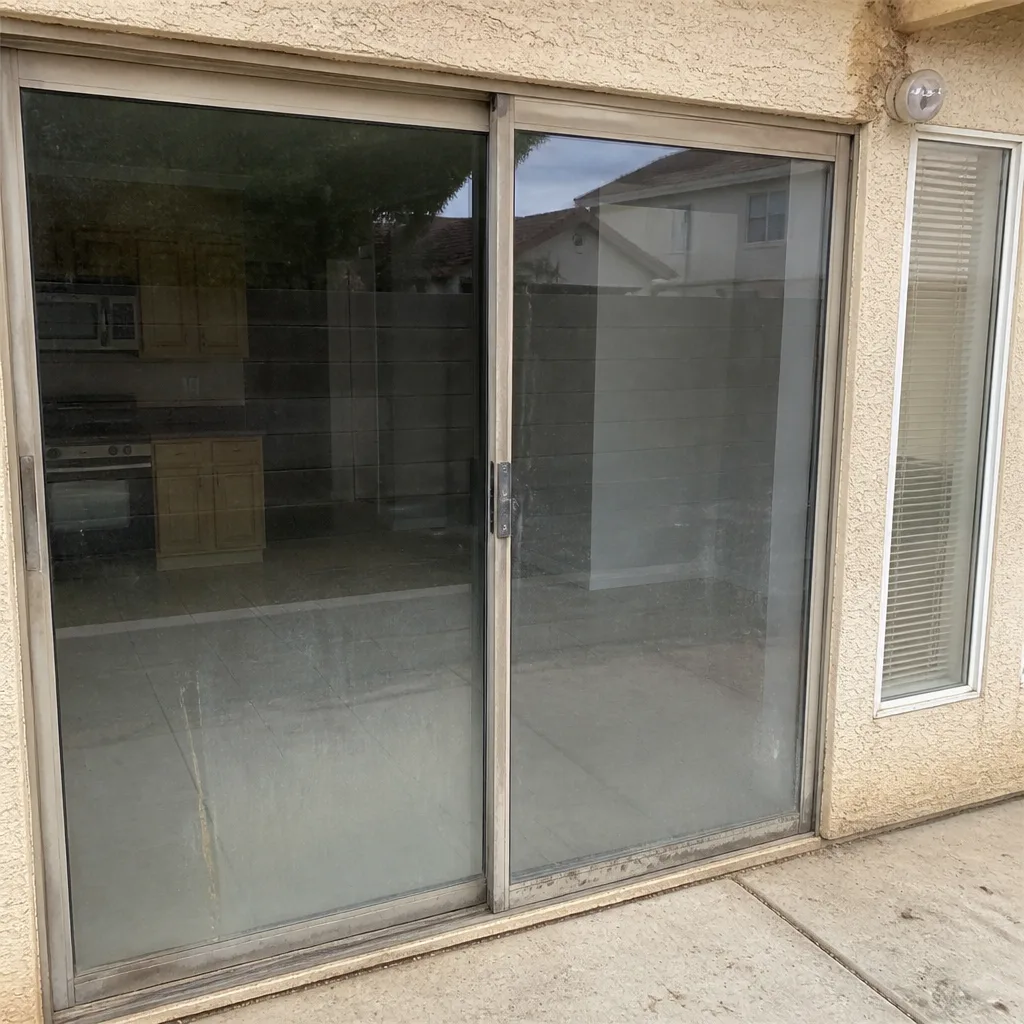 Before
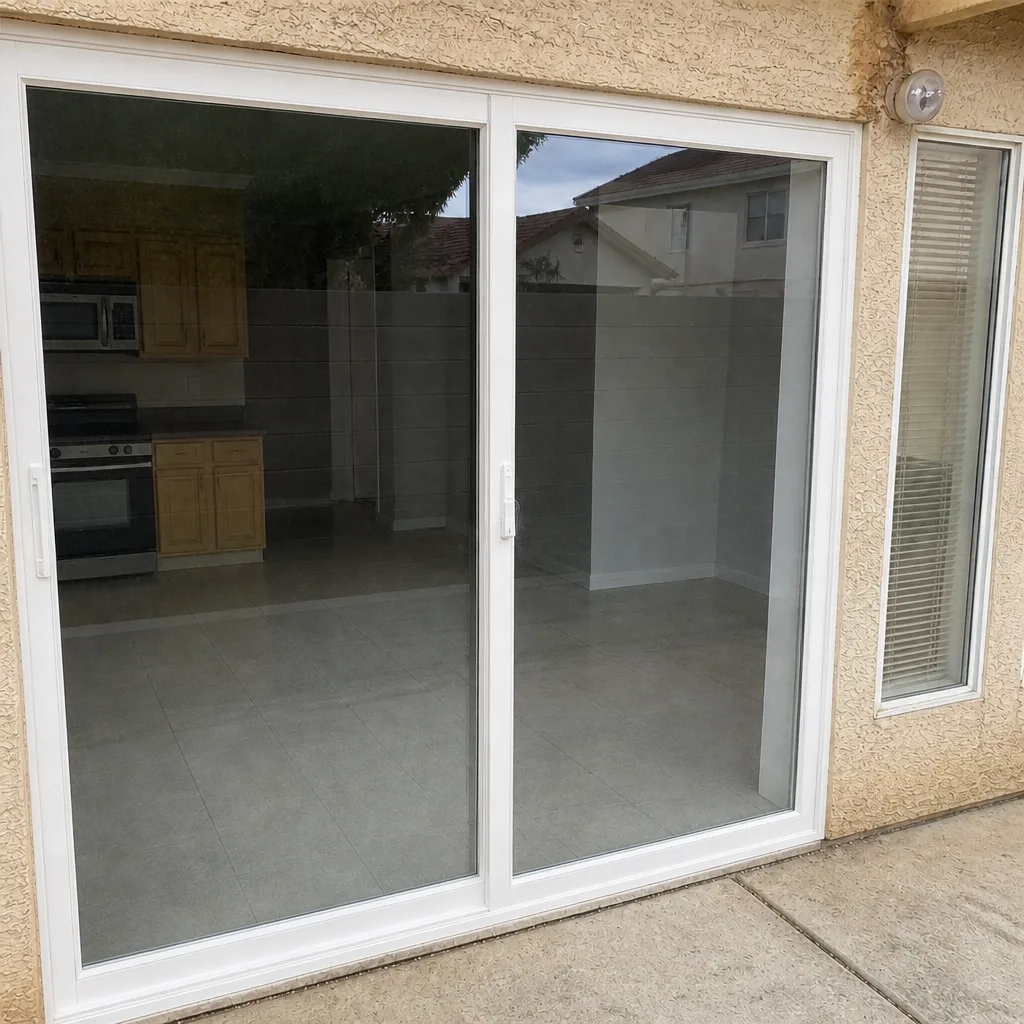 After
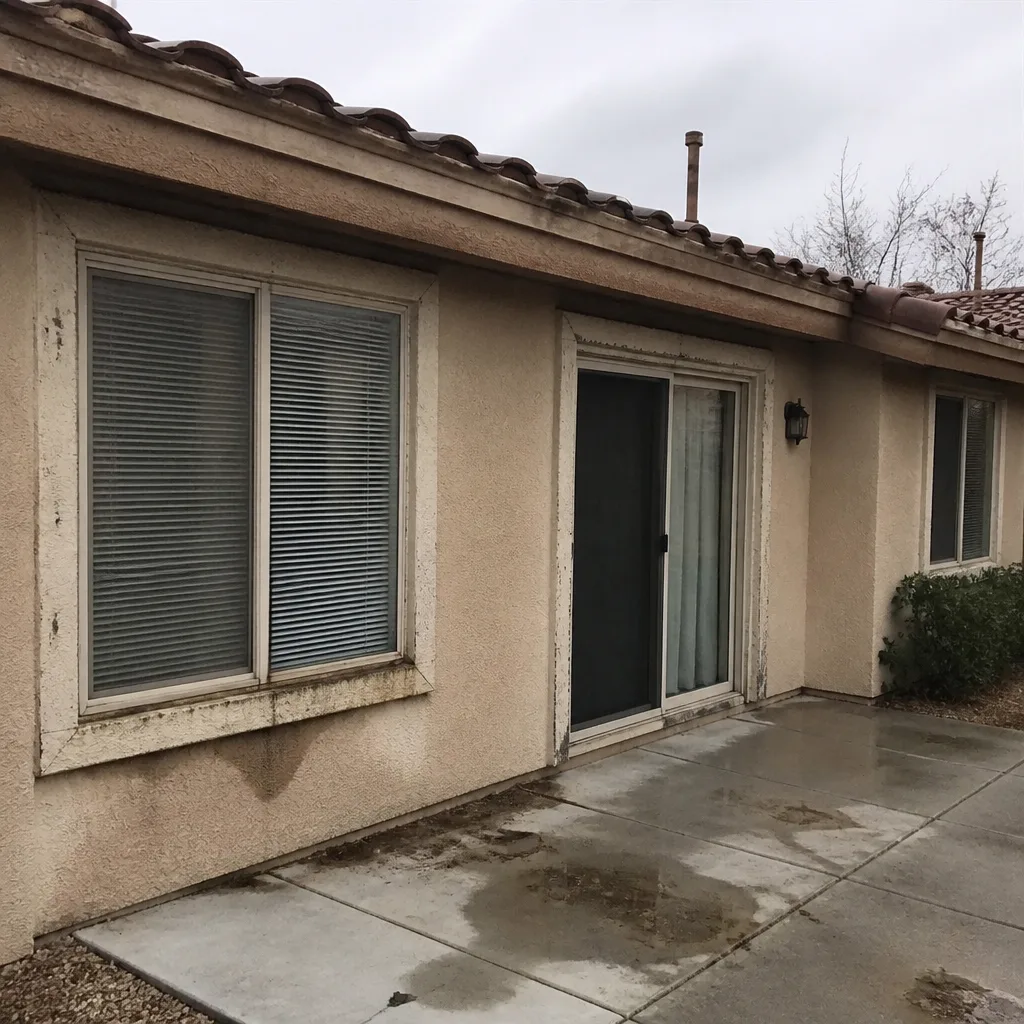 Before
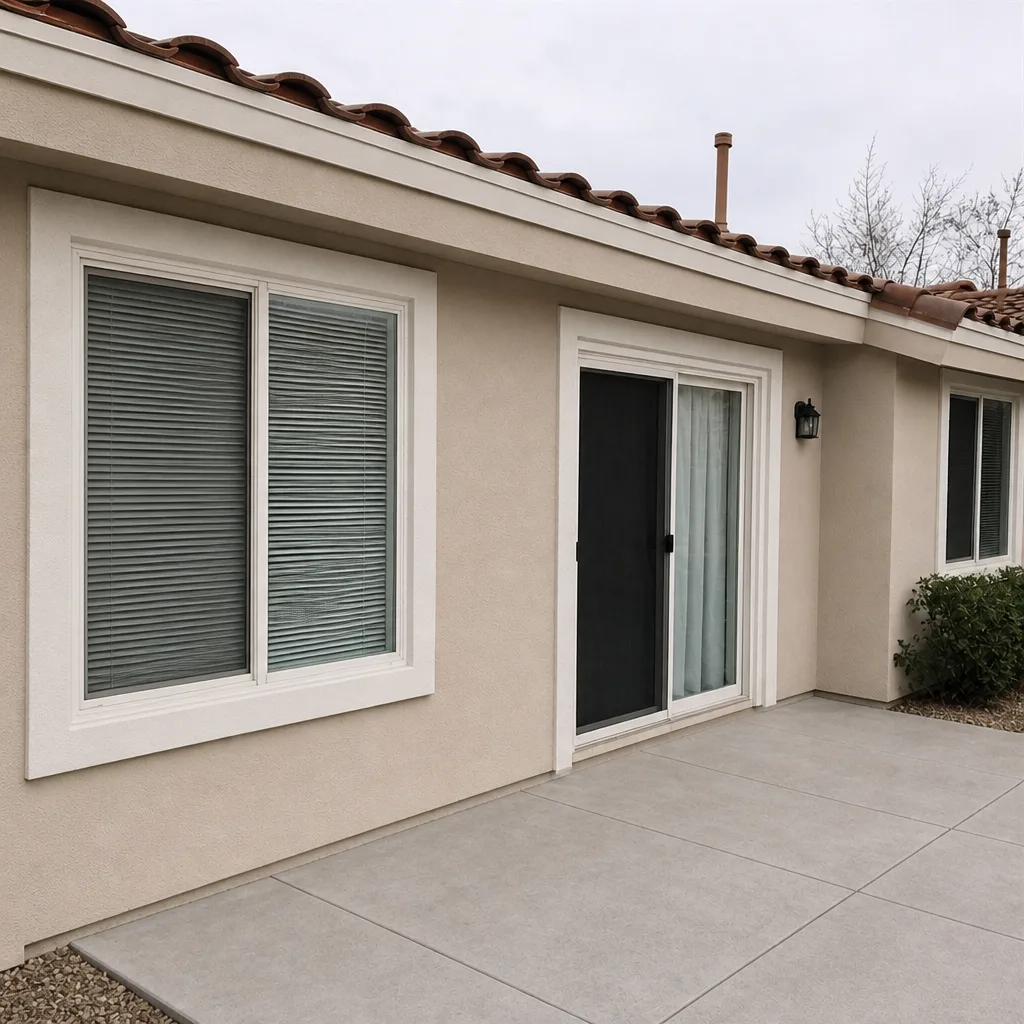 After
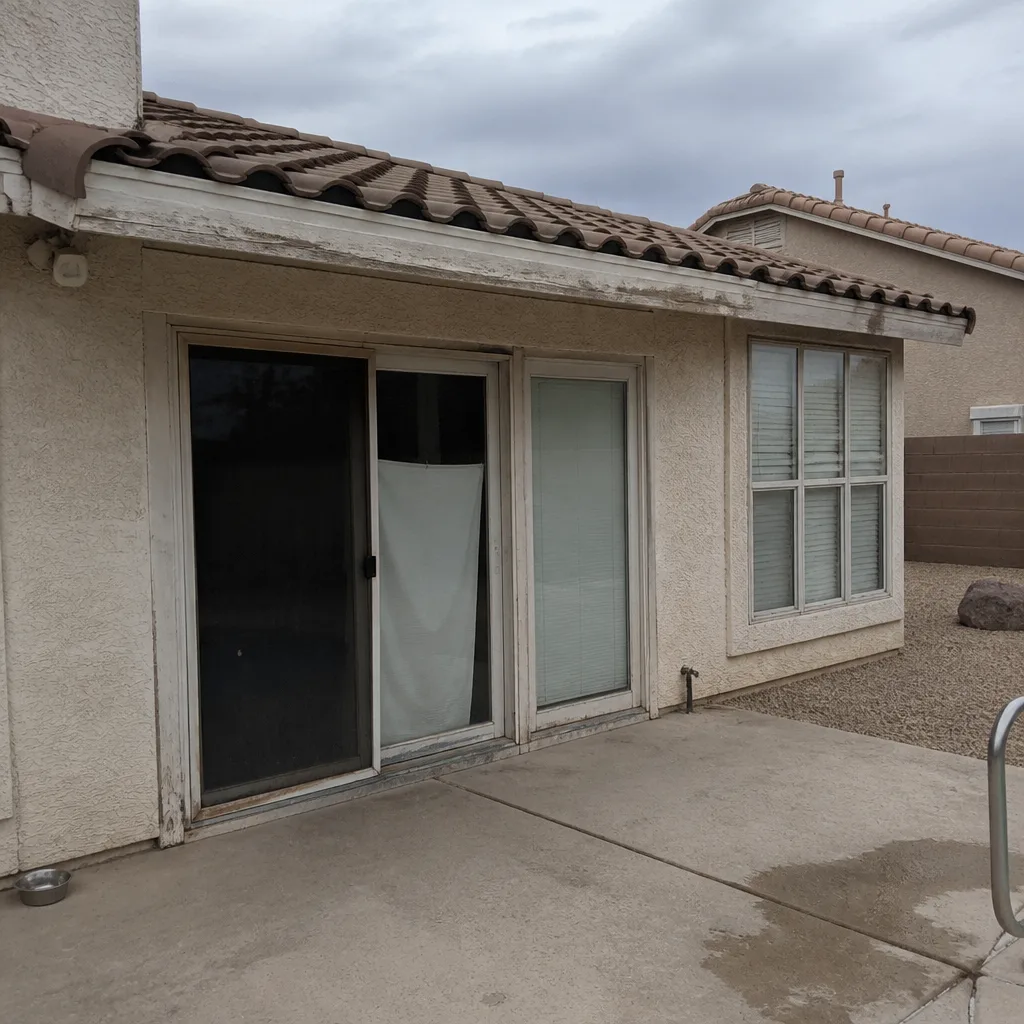 Before
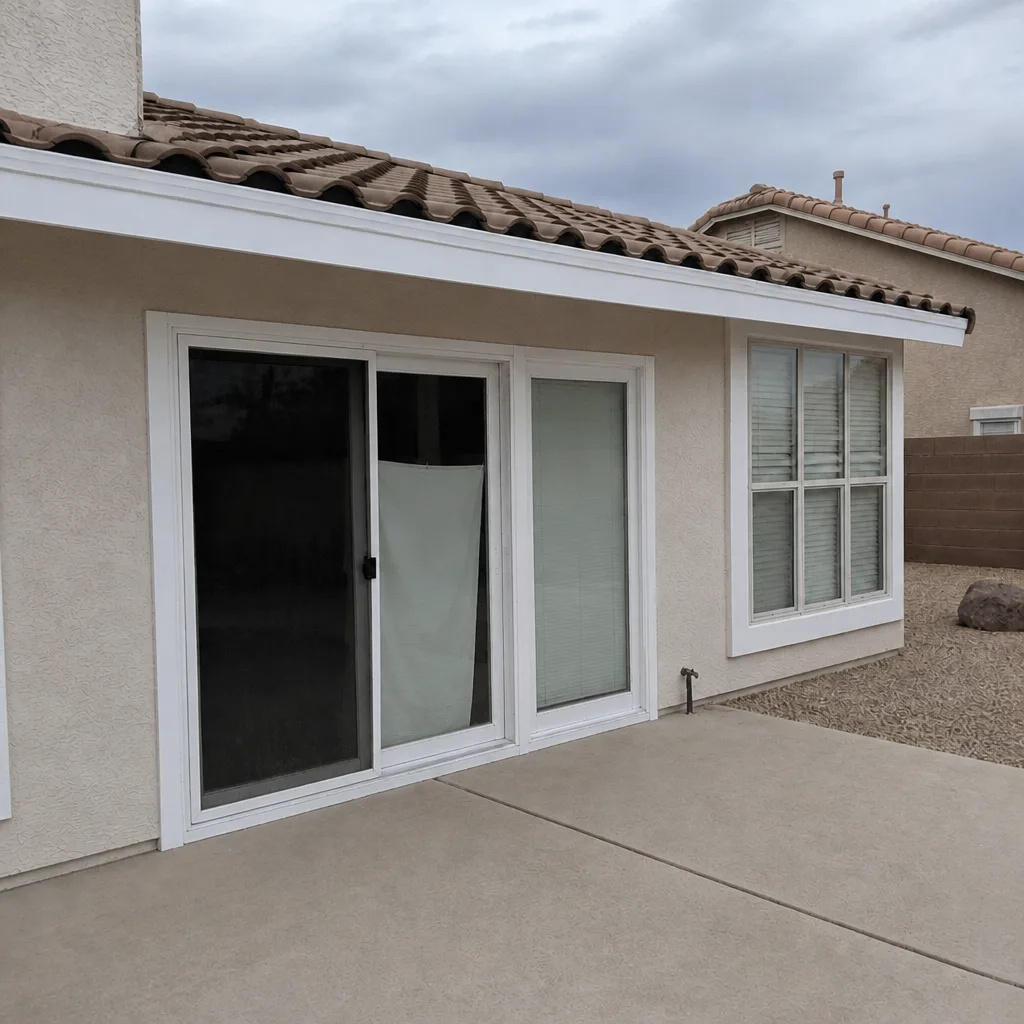 After
Frequently Asked Questions
Not every home does, but it depends on your home’s design load and what the local codes and your insurer expect. If you’re replacing windows or doors, or if your current openings weren’t rated for storm loads, impact-rated glass is the reliable answer. Lines like PGT, CGI, and ECO Window Systems are built for load-bearing performance and are worth comparing side by side with standard products for your home. Call (844) 761-6772 to discuss what fits your property and get a free estimate.
Walk your home’s interior first and photograph any dust trails, water streaks, or daylight gaps around window and door frames. Then inspect the exterior glass, frames, caulk lines, and seals. Don’t clean anything until you’ve photographed it. If you find seal displacement, frame gaps, or new glass damage, get a specialist out to evaluate and document the repair.
Yes. A slider that isn’t fully seated in its track becomes a wind entry point, and high wind pressure can displace seals or push dust and rain into the interior. In our experience, this is the most common way Las Vegas homes take interior damage during a dust event. Check that the panel seats fully and the secondary lock is engaged before every storm season.
Look for the manufacturer label on the glass corner or frame edge, check your home purchase inspection report, and request the permit file from the building department that reviewed the work. If none of those turn up the rating, ask a windows specialist to assess the product in person. Understanding the rating matters for both repair planning and insurance claims.
Not usually, but the assembly matters. Glass can expand and contract sharply with temperature swings, and small chips can propagate. The bigger risk is interior heat build-up and resulting damage to finishes, flooring, and anything with adhesives near window frames. Closing all window coverings on sun-exposed elevations and consolidating family members into one room are the most effective steps.
Fairly firm: a dated photographic record of condition before and after the event, the product’s rating or spec sheet if you have it, and a description of what failed. If the claim is challenged, the carrier may ask whether the opening was rated for the wind load it took, so having that on record ahead of time prevents disputes. Call (844) 761-6772 for help documenting what you have before the next storm.
The Bottom Line
Las Vegas window and door emergencies come from wind, dust, and heat – not earthquakes. The preparation that matters is knowing your wind-load ratings, running the two-minute pre-season check on latches, tracks, seals, and thresholds, and keeping a dated photographic record before every storm. That’s most of it. For the repair and upgrade side of the equation, work with a specialist who installs these assemblies every day, not a general contractor adding glass to a long list. Whether you’re comparing energy-efficient lines for your replacement project or need a post-storm inspection and repair, Jasper Windows & Doors carries eight manufacturer lines and can compare specs honestly for your home’s needs. Call (844) 761-6772 for a free estimate. We answer 24/7. Fast dispatch from 7am to 7pm, Sunday through Friday.
If you’re getting ready for monsoon season and notice several openings with aging weatherstripping or door sweeps that no longer seat, that’s usually the right time to look at window replacement rather than patching gaps opening by opening. New construction or a project still in planning has its own decision timeline, and window installation specs for rated openings should be set before framing closes. If you’re reviewing exterior upgrades across the whole envelope, our Las Vegas team can walk through what’s realistic for your property and budget. For a broader look at what Jasper Windows & Doors offers across manufacturers and door systems, that’s the place to start.
Written by the team at Jasper Windows & Doors.